Showing posts with label motorcycle. Show all posts

Wednesday, February 1, 2012

2012 raider S


Key Features :
  • “S” model gets even more chrome: chrome triple clamps, fork sliders, air box cover, engine covers, headlight housing, handlebar risers, etc.
  • A 6-degree yoke angle—the first ever on a Star® Motorcycle—makes it possible to achieve that custom look as well as neutral handling and straight-line cruisability: 33-degree rake plus 6 degrees yoke angle gives total rake of 39 degrees and 102mm of trail.
  • 5-spoke wheels carry a 120/70-21-inch bias tire up front, and a wide, 210/40-18 radial out back—the tallest and widest ever on a Star.
  • Estimated 42 mpg* means this cruiser can go the distance between fill-ups.

Engine :
  • 113-cubic-inch (1854cc) air-cooled, OHV with 4 valves per cylinder, pushrod 48-degree V-twin pumps out max torque at just 2500 rpm and max power at 4500 rpm for powerful, relaxed cruising.
  • Four pushrod-activated valves and two spark plugs per cylinder provide optimum combustion efficiency along with classically beautiful engine architecture.
  • Ceramic-composite plated cylinders for superior heat dissipation with forged pistons cooled by oil jets. Provides outstanding reliability and longer engine life.
  • 9.48:1 compression ratio and aggressive cam timing increase power output across the board.
  • Computer-controlled, twin-bore fuel injection monitors multiple engine parameters to calculate perfect mixture under all conditions; wide-angle 12-hole fuel injectors provide excellent atomization.
  • A 3.5-liter airbox is hidden in the area below the fuel tank for great performance and clean styling.
  • Two-into-one-into-two exhaust with Exhaust Ultimate Power valve (EXUP®) inside boosts torque in the 2500~3500-rpm range.
  • Special custom-machining of the cooling fin edges gives a jewel-like appearance to the engine as light hits it from different angles.

Chassis/Suspension:
  • All-aluminum cast frame is lightweight, rigid and tuned for light, athletic handling. A light, Controlled-Fill, aluminum swingarm casting complements the bike’s lithe style.
  • Low, sculpted seat holds the rider in place, and pullback bars reach back to enforce a casual, urban cruising style.
  • A 6-degree yoke angle—the first ever on a street-legal Star Motorcycle—makes it possible to achieve that custom look as well as neutral handling and straight-line cruisability: 33-degree rake plus 6 degrees yoke angle gives total rake of 39 degrees and 102mm of trail.
  • Custom 5-spoke wheels carry a 120/70-21-inch bias tire up front, and a wide, 210/40-18 radial out back—the tallest and widest ever on a Star.
  • 46mm fork tubes serve a sweet appearance and an excellent ride through 5.1 inches of wheel travel.
  • A tucked-out-of-sight single shock with adjustable spring preload out back provides a smooth ride under varying loads.
  • Flangeless fuel tank carries a full 4.2 gallons of fuel.
  • Front brake master cylinder with integrated lever operates a pair of 298mm front discs squeezed by strong monoblock calipers for excellent power and feel, with a 310mm disc out back.
  • Strong, light and narrow belt final drive contains embedded carbon fiber for even greater strength.
  • Wiring harness uses super-slim wires for compactness, are lighter weight and switchgear wiring is routed inside the handlebar for a clean appearance.

 Additional Features:
  • Left-thumb operated high-beam switch, and right-thumb activated accessory driving light switch for great visibility.
  • Jewel-like fit and finish, and Star quality paint, chrome and attention to detail are evident all over the Raider S.
  • Cool, tank-mounted instrumentation complements the custom look, and contains analog speedometer and fuel gauge, along with twin digital tripmeters, odometer and self-diagnostics.
  • Bright multireflector headlight, LED taillight, and amber turn signals behind clear lenses give a custom look.
  • 02 sensor and three-way catalyst reduce emissions.

Read More ...

Source : http://www.starmotorcycles.com

Tuesday, January 31, 2012

SPECIFICATIONS NINJA 1000 ABS

SPECIFICATIONS
Engine
Four-stroke, liquid-cooled, DOHC, four valves per cylinder, inline-four
Displacement
1,043cc
Bore x Stroke
77.0 x 56.0 mm
Compression Ratio
11.8:1
Fuel System
DFI® with four 38mm Keihin throttle bodies, oval sub-throttles
Ignition
TCBI with digital advance
Transmission
Six-speed
Final Drive
X-ring Chain
Rake/Trail
24.5 deg / 4.0 in.
Front Tire Size
120/70 ZR17
Rear Tire Size
190/50 ZR17
Wheelbase
56.9 in.
Front Suspension / wheel travel
41 mm inverted cartridge fork with stepless compression and rebound damping, adjustable spring preload / 4.7 in.
Rear Suspension / wheel travel
Horizontal monoshock with stepless rebound damping, adjustable spring preload / 5.4 in.
Front Brakes
Dual 300mm petal-type rotors with radial-mount four-piston calipers, ABS
Rear Brakes
Single 250mm petal-type rotor with single-piston caliper, ABS
Fuel Capacity
5.0 gal.
Seat Height
32.3 in.
Curb Weight
509.4 lbs.
Overall length
82.9 in.
Overall width
31.1 in.
Overall height
48.4 in.
Color Choices
Metallic Spark Black / Metallic Flat Micron Gray, Candy Lime Green / Ebony
Warranty
12 Months
Good Times™ Protection Plan
12, 24, 36, 48 months 
Read More ...

Wednesday, December 28, 2011

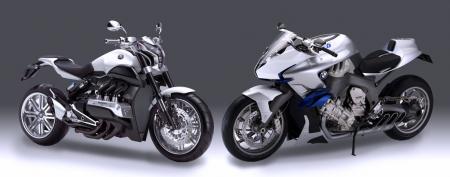
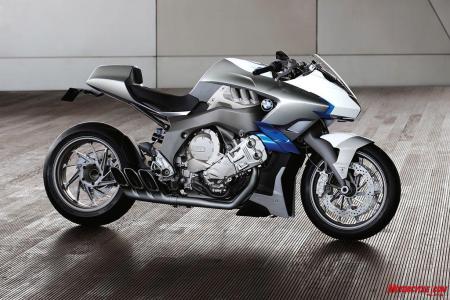
Six-Cylinder Streetfighter Shootout of the Future: Honda EVO6 vs BMW Concept 6

There are currently two motorcycles that have six-cylinder engines, and both of them power big and bulky touring machines: the BMW K1600 and Honda Gold Wing.

Both engines are large-displacement, high-torque powerplants that create sweet-sounding exhaust music, and we’ve wondered what other uses could be made from these unique engines.

We’re not the only ones, as designers from Honda and BMW have both shown concept motorcycles built around these motors, making us wonder if we might one day see a version of either enter production.

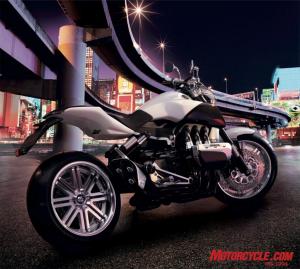
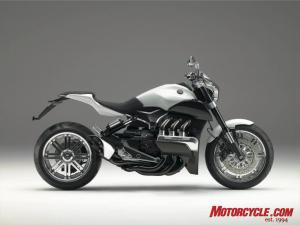
Honda was first to the game when it unveiled the EVO6 at the 2007 Tokyo Motor Show. A “Pride Fighter,” according to Honda, it was a bold concept streetfighter based around the company’s flat-Six engine from the Gold Wing.

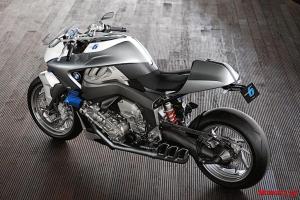
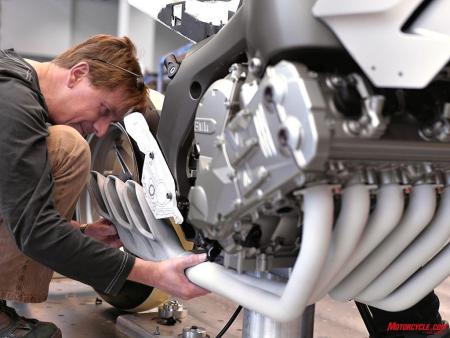
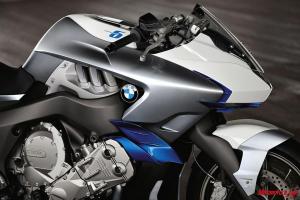
Two years later, at the EICMA show in Italy, BMW teased visitors with the Concept 6 streetfighter model based on a previously unseen inline six-cylinder engine that later debuted in the K1600 GT and GTL.

This year’s launch of BMW’s K1600 series strengthens the possibility of a production version of the Concept 6 becoming reality in the not-too-distant future. The EICMA show might’ve been BMW’s way of doing market research on the Concept 6’s viability.
With four years having passed since a public appearance of Honda’s EVO6, the promise of that model coming to fruition dims, but like the limited-production, high-concept 2005 Rune that utilized the Gold Wing mill, we could be pleasantly surprised. It could be that Honda is just sitting on its hands waiting for the global economy to recover.
With neither bike a sure thing, we decided — in the spirit of a good, old, black and white Godzilla movie — to create some science fiction of our own; to pit one concept model against another by extrapolating information from the current models they’re derived from and combining that knowledge with the limited facts presented by the respective manufacturer.
The introduction of the BMW K1600 series sheds light on what the Concept 6 is capable of achieving. In its current touring guise the inline six-cylinder engine produces a claimed 160 hp and 129 ft-lb of torque. It’s likely a streetfighter like the 6 would be given performance tuning to bump up peak output somewhere near 180 hp at the crankshaft.
The larger displacement GL engine (1832cc vs 1649cc) cranks out a relatively paltry 118 hp but a more respectable 125 ft-lb of torque. The extinct Rune used hotter cams and 12-hole injectors to achieve a slight power upgrade, but we’d hope there’s more oomph than that lurking inside. In terms of sheer horsepower numbers, the Beemer will have a clear advantage.
The Rune, carrying about 840 lbs, could cover a standing-start quarter-mile in 12.5 seconds. In contrast, the lighter and more powerful BMW GTL can perform the same feat in the low 11-second range.

Obviously Honda must contend with this performance imbalance for its EVO6 to compete with BMW’s Concept 6. Perhaps underneath the EVO’s stylized cylinder-head covers is a new DOHC valvetrain and four-valve cylinders, which would go a long way in bringing more horses to Honda’s trough. The addition of gasoline-direct-injection technology would allow a bump in compression from its current 9.8:1 ratio to a figure commensurate with BMW’s 12.2:1.

According to Honda’s press material, the EVO6 is to utilize an automatic transmission, with two automatic shifting modes in addition to a bar-mounted toggle for operating the six-speed gearbox manually. With the introduction last year of the dual-clutch transmission in the VFR1200F, we’ll assume that technology would make it to this concept, and, likely, to the next Gold Wing.

BMW makes no claims to advancing transmission technology. In fact, the Concept 6 closely resembles the company’s own K1300R, making it even more feasible that we’ll see this bike in dealerships as a pseudo replacement to the 1300R that isn’t imported to America. The K1300 platform will provide a base from which to construct the Concept 6 streetfighter, although a completely new frame will be necessary to hold its wider engine.

Besides the engine, the EVO6 shares little to nothing with other Honda models. The aluminum twin-spar frame on the Gold Wing is replaced by one with an aluminum backbone that uses the large engine as a stressed member. The EVO’s rear suspension is via twin dampers with remote reservoirs that appear to be sprung by air, leaving open the possibility of remote suspension adjustment (the current Gold Wing has an onboard air compressor for preload adjustment).

Up front the Honda wears a standard inverted fork, while the Concept 6 utilizes BMW’s Duolever front suspension technology borrowed from the K series. In the rear each bike sports a shaft final drive and a single-sided swingarm, just like their corporate brothers.

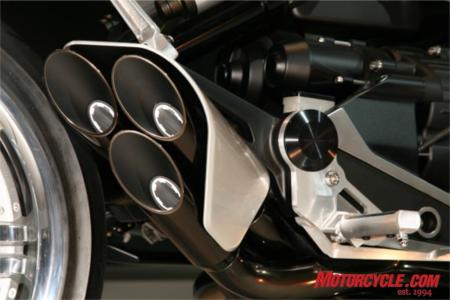
Exhaust routing on both bikes is highly stylized, with the BMW showcasing a six-into-two-into six system, each side featuring a trio of rectangular exhaust outlets. The Honda’s upswept GP-esque exhaust system appears to be a six-into-six format. It would be challenging for either system to meet EPA regulations, but some under-engine canisters might allow the basic designs to carry into production.

Visually the two bikes are keenly different from one another. The BMW is futuristic and stealthy in appearance; a motorcycle Hollywood would use in an upcoming sci-fi flick. Its “split face” design echoes a David Robb-penned theme seen in other BMWs, with the nose blending into the sidepods and carbon-fiber fuel tank.

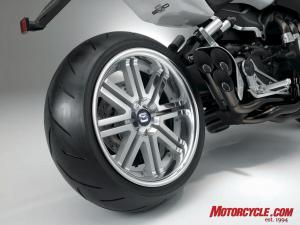
The Honda portends the brute force of a refined muscle car on two wheels, assisted by its fattish 220mm rear tire. Its handlebars are positioned higher than the BMW’s. Of note are the peg feelers on the EVO6, perhaps a sign that it might see a production line.

"The completion of this model run doesn't herald an end to this fabulous motorcycle,” Honda Motorcycle Division Vice President, Ray Blank, once said about the Rune: “Nor to Honda's determined pursuit of bringing concepts to production reality."

Of motorcycles currently in production, the Star/Yamaha VMax would be the closest match to this conceptual pair, boasting high-end features and a monstrous engine like these prototypes. However, the VMax’s near-$20K price has hurt its sales, a situation that might give pause to BMW and Honda.

Resting on a 66.9-inch wheelbase, the VMax scales in at 684 lbs full of fluids and boasts nearly 200 hp. The K1600GT already weighs just 703 lbs wet, so the Concept 6 could easily match the Max. But for the EVO6, that giant Gold Wing engine will ensure an optimistic mass of just below 800 lbs.

So, which would be a more desirable streetfighter grande? We’re not sure, but we’re betting BMW’s Concept 6 will be the first one you’ll see at a dealership.

As we noted in our K1600 Unveiled article, “BMW would be foolish not to amortize the cost of developing that powerplant by including it in another platform, and we’re reasonably sure BMW understands that, too.”

Read More ...


Source : http://www.motorcycle.com

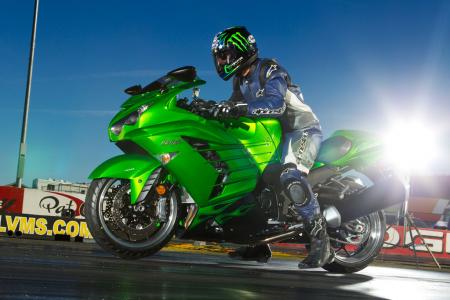
2012 Kawasaki ZX-14R Review

It’s neither easy nor politically correct to build the most powerful streetbike ever offered to the public for mass consumption, but that’s what Kawasaki has done with the incredibly potent new ZX-14R.
The ZX-14 has been a major player in the hyperbike wars since its introduction in 2006, becoming the only machine that could hold a candle to Suzuki’s mega-powerful (nearly 160 hp) Hayabusa that was introduced back in 1999. The ZX-14 cranked out a remarkable 171 hp on the dyno and must’ve worried Suzuki’s marketing department and engineering team, as they released a more powerful Hayabusa in 2008 with a bigger engine that produced around 165 horses.
Kawasaki surprised us with a revised ZX-14 in 2008, just two years since its debut, to meet the revitalized Suzuki challenger. While the Kawi remained the smoother and more accommodating choice, emissions regulations took a chunk out of the ZX’s top-end performance. Running excessively rich to preserve its catalyzers, the ZX spat out 10 peak horses less than the original.

his obviously didn’t sit well with Kawasaki, so they’ve now responded with the ZX-14R for 2012. Note the addition of the R to its name. Kawi’s engineers made a host of upgrades to the ZX’s powerplant, most notably by adding 4mm to the engine’s stroke that ups displacement from 1352cc to 1441cc. This 6.5% size increase plus hot-rodding tricks like hand-finished intake ports, more radical camshaft specs, a compression ratio increase and tapered exhaust headers has resulted in what Kawasaki claims is the most powerful mass-produced motorcycle engine in the world.
Read More ...


Source : http://www.motorcycle.com

Saturday, June 18, 2011

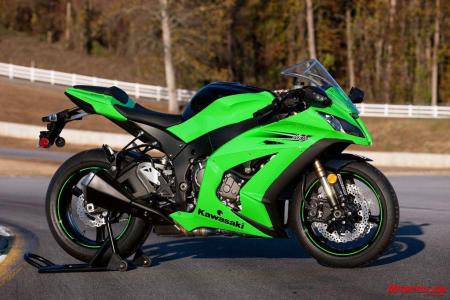
New Kawasaki ZX-10R 2011

Kawasaki has upped the ante in the literbike wars with the most technically advanced sportbike it’s ever created. Its traction-control system is not only highly sophisticated, it is also standard equipment and is the first high-performance TC to be fitted to a Japanese sportbike.
A few weeks ago, lucky canine Pete came away from riding the new Ninja at Road Atlanta gushing about the transparent nature of the Sport-KTRC TC. “The system’s activation is notably seamless and not nearly as assertive as Ducati’s DTC,” he wrote in his First Ride review. He also praised its improved chassis and rippin’ 170-horse powerplant.  And the MO staff agrees that this is one of the most attractive Ninjas ever.
Kawasaki ZX-10R
One caveat: Kawasaki recently placed a “technical hold” on ZX-10Rs, withdrawing shipped models from the market until it solves a still-undisclosed problem, rumored to be within the engine but not something that could cause catastrophic failure. Kawasaki is playing conservative with this issue, but you can bet they’ll have it sorted promptly.
Anyway, you can’t buy a cheaper TC-equipped sportbike than the ZX, ringing in at $13,799. A racetrack-developed ABS system adds $1000 to the price.
Although we still need to sample the 10R on the street and in the company of its rivals to judge its ultimate potency, we’re already believers in the potential of this exciting new literbike. Pete ended up his review warning the other Japanese brands: “Honda, Suzuki and Yamaha had better step up their game ASAP or risk a shrinking profile in the literbike wars.”

Sumber : www.motorcycle.com

Friday, May 27, 2011

2011 Yamaha FZ8 First Look


Yamaha’s sporting line of motorcycles grows with the introduction of the new 2011 Yamaha FZ8 street bike; a streetfighter-style machine that offers European styling and a conventional riding position with a sporting engine and chassis character. At an MSRP of $8490, it slots in directly between the FZ1 and FZ6R, Yamaha’s two current streetfighters.

Beneath the 4.5-gallon fuel tank lies a liquid-cooled and fuel-injected 779cc Inline-Four. The engine uses the same cases as the pre-crossplane crankshaft-equipped Yamaha YZF-R1, but gets an entirely new crankshaft and top end. The engine operates with a conventional engine firing order, unlike the current R1, while the powerband has been specifically tuned for the rigors of urban riding with more low-to-mid rpm torque output.

Each piston slides within a cylinder that features a 68.0 x 53.6mm bore and stroke. Fuel is squeezed at a 12.0:1 ratio and the bike uses a 16-valve cylinder head, actuated by dual overhead camshafts. Power is transferred back to the rear tire through a manual cable-actuated clutch, 6-speed transmission and chain final drive.
The engine is suspended within a black cast aluminum frame mated to a swingarm of the same composition, with its handling emphasis put on moderate-speed agility. Front-to-rear weight bias is claimed to be 51/49; suspension includes a 43mm inverted fork and a spring preload-adjustable shock absorber.

The FZ8 rolls on 17-inch cast aluminum wheels that feature a 5-spoke design. The wheels are paired to Bridgestone Battlax BT-021 sport touring tire in sizes 120/70 front and 180/55 rear. Braking components consist of a pair of 310mm discs clamped by 4-piston calipers up front and 267mm rear disc with a double-piston caliper out back.

The cockpit of the FZ8 is similar to the FZ1 and is designed to be a balance between sport and comfort. It makes use of a standard, upright aluminum handlebar that is said to be positioned 4mm forward as compared to its elder sibling. The footpegs have also been positioned down 10mm and back 15mm. Seat height is measured at 32.1 inches off the ground and with a full load of fuel the bike is claimed to weigh 480 pounds.

Visually all of the bikes major components are painted black and the engine is hung out in the open without any fairings or plastic body panels covering it. The FZ8 is available in one color, Raven, and will be available in dealers December of this year.
Engine: 779cc liquid-cooled Inline-Four, 16-valve
Bore x Stroke: 68.0 x 53.6mm
Compression Ratio: 12.0:1
Fuel Delivery: Fuel-injection
Clutch: Wet multi-plate, cable actuation
Transmission: 6-Speed
Front Suspension: Soqi 43mm inverted fork, 5.1 in. travel
Rear Suspension: Soqi shock absorber with adjustable spring preload; 5.1 in. travel
Front Brake: 310mm disc, 4-piston caliper
Rear Brake: 267mm disc, 2-piston caliper
Front Tire: Bridgestone 120/70-17
Rear Tire: Bridgestone 180/55-17
Curb Weight: 470 lbs.
Wheelbase: 57.5 in. Length: 84.3 in. Width: 30.3 in.
Rake / Trail: 25 deg. / 4.5 in.
Seat Height: 32.1 in.
Fuel Capacity: 4.5 gal.
MSRP: $8490, Raven 

Article Source: http://www.motorcycle-usa.com

2011 Victory Vision Tour Comparison

2011 Victory Vision TourVictory’s 106/6 Freedom V-Twin provides plenty of usable power early in the rev range, registering just shy of 80 lb-ft at 1900 rpm on the dyno. All it takes is a good twist of the throttle to realize the four-valve, SOHC 50-degree V-Twin has a revvier nature than the Harley’s pushrod-operated mill. Even with the Twin Cam 103, the Harley doesn’t match up to the 92.17 lb-ft of torque the Victory Vision  put out at 2700 rpm on the dyno. Topping the horsepower and torque charts helped the Victory Vision Tour win our 0-60 test by 0.06 seconds. Both bikes produced similar power curves during the 0-60 runs with the biggest gains in miles-per-hour coming in between one-two seconds. The Vision did top our scales, though, weighing in at a portly curb weight of 909 pounds with the Road Glide Ultra no featherweight itself at 875 pounds. The 34-pound weight difference is all up front as the rear of both bikes weighed an identical 490 pounds.

The Victory Vision’s counter-balanced engine is much more sedate at idle than the heavy dose of vibrations the Harley doles out, but vibes do creep in at higher rpm and the front fairing rattles as a result. The air/oil cooled engine also produces quite a bit of heat, most noticeably on the inside of the left leg. The Road Glide Ultra put out its own share of

For 2011, the Vision Tour got a major overhaul on its transmission, ABS is now a standard feature and on cold morning rides you will enjoy the addition of heated seats and grips.
heat, but has an Engine Idle Temperature Management System that automatically cuts fuel and fire from the rear cylinder at idle making it more bearable when stuck in LA freeway traffic. The Victory Vision Tour lost the mpg battle by 3.14 miles, 36.9 to 33.86. The 1731cc engine provides a broad spread of power but its throttle wasn’t as snappy as at it built revs a little slower, chugging a bit at times at low rpm. Our Vision test unit’s fuel delivery could have been a bit more refined.

The main improvement to the 2011 Vision is its transmission which now features helical gears in all but fifth. The lower gears are noticeably quieter and engage smoother. When you click the constant mesh transmission into its overdrive sixth, the engine drops about 500 rpm as it settles nicely into highway cruising mode. When we took the Vision to get dynoed, Speed Shop owner Mickey Cohen commented on the noticeable improvement to the Vision’s tranny.

But while the transmission is notably smoother than before, it was more difficult to modulate the Vision’s clutch because it engages later in the lever release and made low speed maneuvers challenging. The bike feels longer and top heavy at slow speeds, requiring a wider birth in tight maneuvering than the Road Glide Ultra. The Vision’s tank is placed high on the frame and its large six-gallon capacity adds to the top heavy feel. This is when the extra 34 forward-biased pounds become most noticeable. Get the Vision up to speed though and the bike tracks well and is very stable when leaned over. Its floorboards are situated high enough to allow for generous lean angles before hard parts scrape.
The 2011 Victory Vision Tour utilizes big dual 300mm floating rotors with 4-piston calipers on the front and a single 300mm rotor with twin-calipers on the back. It’s a linked braking system, back to front. We found the front brakes to be a bit soft and lacking a strong initial bit. You’re better off using the back on quick stops because the linked system will also engage the front. The Vision’s ABS, now a standard feature, helps out when you need it most though.

2011 Victory Vision Tour cockpit2011 Victory Vision at speed. 2011 Victory Vision Tour
(R) The big dials, blue backlights and gear indicator make the Victory Vision's cockpit very rider-friendly. (M) The Vision tracks true and steady in the twisty stuff. (R) The Victory Vision Tour has a low 26.5-inch seat height and plenty of storage space for long hauls.
In the saddle, there’s not much that differentiates the two. The seat on the Victory Vision Tour provides four inches of foam padding and lumbar support. The Road Glide Ultra meanwhile is equipped with the new Ultra Classic seat which has a narrower width than before, a deeper bucket and a great shape. Riding positions are almost identical in an upright position with rider’s arms comfortably below shoulder level.

The Vision offers more creature comforts – a windscreen that adjusts at a push of a button to go along with heated seats and grips. The Road Glide Ultra has a taller, more touring-friendly windscreen than the standard Road Glide but it isn’t adjustable at the push of a button. The Victory Vision Tour’s cockpit is rider-friendly with an easy-to-read analog speedo and tach and a big digital gear indicator. Blue backlights really highlight the gauges at night. The Road Glide Ultra features a cockpit-style instrument layout, with an analog speedo and tachometer mounted front-and center and smaller dials like a fuel gauge and oil pressure gauge on the perimeter. It also has an H-D Smart Security System, whereas the Victory comes with none. We love the huge topcases on both bikes and found the Vision’s push button system to be more convenient than the Harley’s latches. But the saddlebags on the Harley are much better because the width of Vision’s side compartments are a little shallow and more challenging to load.


Article Source: http://www.motorcycle-usa.com 

Kymco Scoot 2 TX Ride Picture 12 of 25


The third day of our Scoot2TX trip was a rain day. It wasn’t a nuisance rain, but a multi-hour downpour that soaked us all and caused flooding in many of the low laying areas here in southern Louisiana.

The inclement weather was Mother Nature’s fault of course, but Robert, Justin and Guido were a bit at fault, too. You see, this morning they caused a delay when they decided to visit Mobile’s Battleship Memorial Park to tour the USS Alabama battleship, USS Drum submarine and dozens of decommissioned airplanes, helicopters and tanks. They brought back some great pictures, though!

The entire group ultimately hit the road at around 10:30 am, followed by two and a half hours riding stoplight to stoplight on the coast road leading from Mobile to where we had lunch beachside in Biloxi. Twenty minutes after lunch, in Gulfport, the rain started … and didn’t let up for four hours (or until we were on the outskirts of Baton Rouge).
Guido Ebert rode the 2011 Downtown 300i today and here's his impression of the new bike: "I rode the bike once before – six months ago during KYMCO USA’s 2010 product introduction at the Biltmore Estate in Asheville, N.C. Climbing aboard the Downtown today, I immediately recalled what I liked about this bike on my first jaunt: it’s light and quick, which equates to responsive. In fact, so responsive, I had no problem smoking Justin’s more powerful - but 106-lb. heavier - Xciting 500Ri from stoplights.

"Sure the 500Ri is faster at the top end, trumping the 300’s top speed by about 30 mph, and its weight makes it a bit more stable at highway speeds, but for real-world, legal speed use, the Downtown would be my bike of choice for urban commuting that takes a rider through busy metropolitan areas, on surface streets and freeways." An added bonus: the bike’s a fuel miser, too, delivering approximately 75 mpg during today’s 220-mile trip that saw speeds up to 70 mph.

Sold in Europe for the past six months, the Downtown 300i is expected to become available in the U.S. late this summer. Going to be at Amerivespa? Stop by the KYMCO demo truck and take a look at the bike for yourself.

Article Source: http://www.motorcycle-usa.com 

2011 KTM RC8R Superbike First Look

The 2011 RC8R chassis features a completely new suspension and damping set-up for the suspension.
The structural architecture of the 1195cc 75-degree Twin is unchanged  including the 105mm bore and 69mm stroke  though changes to the cylinder head result in 175 horsepower and 93.7 lb-ft of torque.Cylinder head changes to the KTM RC8R Twin churn out more horsepower and torque, for a claimed 175 ponies and 93.7 lb-ft of torque.
KTM brings more power to the table with its 2011 RC8R Superbike. The Austrian marque had previously announced a race-ready version of its Twin-powered superbike, dubbed the 1190 RC8R Track, at the earlier INTERMOT show in Cologne. For Milan, the Orange and Black announces changes to the base RC8R with  horsepower up to a claimed 175.

The structural architecture of the 1195cc 75-degree Twin is unchanged, including the 105mm bore and 69mm stroke. Internal modifications to the four-valve heads feature a “newly developed dual-plug ignition.” Other changes includes a new crankshaft spinning in the crankcase. The mods add up to an impressive 10 horsepower leap over the previous generation RC8R, with 175 horsepower and 93.7 lb-ft of torque (previous version claimed 165 horsepower and 90.7 lb-ft torque).

The chassis features “a completely new suspension and damping set-up” for the suspension. A revision to the rear shock linkage is also touted, along with a wider array of suspension adjustment settings. Other tweaks include a new gear shift linkage and LED running lights.

Visually the RC8R benefits from a stunning new paint scheme. Stay tuned for more technical details as they are made available.

Article Source: http://www.motorcycle-usa.com 

2011 Honda CBR1000RR Street Comparison


When Honda set out to build the latest generation CBR1000RR, who knew that it would become one of best sportbikes ever made? Not only is Honda’s $13,399 liter-bike a two-time Superbike Smackdown Track and Street champ, it’s reputedly one of the primary benchmarks used when BMW engineered its own S1000RR. Although it’s been a few years since the bike received any major technical updates the 2011 Honda CBR1000RR continues to make an impression on us.

Physically the CBR appears to be one of the more compact motorcycles in this group, however, when you jump into the saddle the cockpit layout isn’t unusually tight. In fact, next to the RC8R, the CBR offers the most accommodating ergonomics package in this test, which is surprising considering it lacks any sort of control surface adjustability. Even though the seat is a little higher at 32.3 inches than the rest, with exception of the Ducati and Yamaha, it doesn’t feel that lofty. The seat also offers a reasonable degree of comfort, though it isn’t quite as good as the GSX-R’s seat. The rearview mirrors are shaped well and provide a clean view but the windshield could be a little taller. Lastly, we liked how slim the Honda is despite its Inline-Four engine configuration. On the scales the CBR1000RR weighs in at 443 pounds —four more than the class-lightweight Kawasaki ZX-10R. This combination of light weight and low center of gravity makes the Honda feel like one of the lightest bikes in this test too.


Light  nimble handing is what the Honda CBR1000RR is all about.Whether youre riding on smooth pavement  bumpy pavement the Honda CBR1000RR chassis is unflappable.The Hondas brakes are powerful and easy-to-use however the 11 model seems to offer less initial bite than years past.The Hondas drivetrain including the slipper-action clutch and six-speed gearbox perform well as test rider Brian Steeves demonstrates.
The 2011 Honda CBR1000RR is an excellent street bike. It has an ultra-stable chassis that is well balanced and the engine has the mid-range punch that always seems ready for action. Some folks complain about the looks but we think it has a very Honda feel with its smooth lines, flat front cowling and wide, flat body panels. The exhaust is ugly though.
“The Honda is one of the easiest bikes to ride,” comments Dawes. “Not only is it comfortable, it feels really small and compact. It’s really light too. In fact, there isn’t much I don’t like about the bike besides the styling.”

The Instrumentation/Electronics category is one area where the CBR came up a little short. For sure it’s mixed analog/digital display is easy to read, but it lacks some of the features including gear position indicator and electronic amenities like adjustable engine power maps or traction control. To be fair, however, the bike is so user-friendly and non-intimidating that it really doesn’t need them. But in this day and age technology helps lure buyers into the dealerships.

Getting underway from a stop on the CBR is easy due to a rather low first gear, responsive cable-actuated clutch and one-finger-easy lever pull. Final drive gearing is 16/42, more reasonable for street use than some of the other bikes’ final drive because it helps maximize engine power.

Speaking of power, or a lack there of, the Honda didn’t really astound us with its mid-pack outright horsepower output. You can argue that 153.08 hp @ 10,800 rpm isn’t anything to scoff at, but it does leave the CBR1000RR three horsepower down on the GSX-R1000 and about a half pony up on the RC8R. That’s not real impressive on paper. What saves the CBR is its fat, and class-leading, mid-range engine performance that outshines the rest of the Inline-Fours. The dyno graph shows how the CBR stays above the rest of the Fours from five to ten-grand. This, combined with the shorter gearing, makes it a real torque-monster on the street. Its maximum torque rings in at 77.79 lb-ft at 9700 revs, which is just a single lb-ft shy of the S1000RR – roughly 10 down to the Twins. This helps the Honda accelerate harder than some of the other bikes during the majority of riding scenarios.

With its strong mid-range engine performance always on tap, the Honda offers the best fuel economy figure observing an average of 36.7 mpg. The CBR also benefited from having the second-largest fuel capacity at 4.7 gallons which gives it a range of 158.9 miles between fill-ups.

In the acceleration tests the Honda achieved the third-fastest 0-to-60 mph time of 2.90 seconds, two tenths behind the class leading S1000RR and a mere hundredth off of the GSX-R. In the quarter mile the CBR ripped off a 10.07-second run at a speed of 143.4 mph. The excellent feel and smooth light action provided by the cable-activated clutch also played a significant part during launch, as did its more street-oriented final drive gearing. Without a doubt a 9-second run would have been possible, but we were only giving each bike three attempts at the strip to keep things fair. The six-speed transmission performed flawlessly and all of our testers were pleased with the calibration of the slipper-clutch during hard charging corner entry maneuvers.

While the Honda’s powerband impressed us, its overall character, including sound, was lacking. When the engine is loaded it doesn’t really deliver the same sensation of speed as the other superbikes. The roar of the engine seems muted which doesn’t make it quite as exciting. The results from the sound test show that the CBR equaled the BMW’s decibel rating of 82 dB at both idle and 100 dB at half maximum engine speed, which really came as a surprise considering how quiet it seems on the road. We also noticed that the engine vibrated more than some of the other Inlines, including the silky-smooth ZX-10R and Yamaha R1.

“For the street the Honda has the best engine,” explains Steeves. “It doesn’t have the top-end pull of the BMW or Kawi or Suzuki for that matter—but for the majority of situations you’re in on the street it doesn’t really matter. What does matter though is how hard it pulls between seven and 10,000 rpm.”

In the third year of its development cycle the Honda CBR1000RR still has what it takes to run at the front.
The 2011 Honda CBR1000RR seems to be destined to play bridesmaid to the BMW. We think that is an acceptable role considering how well it was represented in our shootout.
Once again Honda’s chassis has impressed us after we ride it back to back with the rest of the pack. Out on the road it delivers a level of agility comparable to the Ninja ZX-10R, making it one of the best –handling four-cylinders in the shootout. Corner entry requires minimal effort but it still doesn’t maneuver from side-to-side as quickly as the KTM—it is close though. Similar to the BMW and Kawasaki, the Honda delivers a smooth supple ride without compromising its sporting ability. The suspension is balanced and performs well on virtually any road surface and was rated at the top of our Handling & Suspension category.

“Of all the bikes in this test the Honda is probably the easiest for me to ride in the twisties,” comments Gauger. “You don’t need to put a lot of input into the bike to make it change directions it just kind of does it by itself… at least it feels that way. In my opinion there isn’t a better handling bike out there.”

The CBR continued to receive high marks in the Brake category where it was ranked second behind the technologically-superior BMW, but ahead of the fashionable Brembo-equipped Twins. Even though the radial-mount Tokico brakes look amateur compared to the sturdy monoblocs employed on the Ducati and KTM, the Honda’s set-up
2011 Honda CBR1000RR Street Smackdown
Waheed tests the wheelie ability of the 2011 Honda CBR1000RR. He says it passes...
is more than enough to get the job done. Initial bite from the front brakes wasn’t quite as sharp as we remember, but power and feel progressively ramps up as you tug harder on the lever. The rear brake worked flawlessly too and is comparable to the rest of the Inline bikes. In our braking test the Honda was able to stop in a distance of 134 feet from 60 mph, good enough for second best behind the ZX-10R and S1000RR which tied for top honors at 129 feet.

If you’re seeking the easiest and most affordable liter-class sportbike for 2011 than strongly consider the CBR1000RR. Its powertrain is perfectly suited for the street and its chassis is still one of the best on the market today. The bike is comfortable, easy to ride and gets excellent gas mileage, so what’s not to like about it? Even though it doesn’t feature all the electronic bells and whistles that are becoming more common on some of the other bikes, the 2011 Honda CBR1000RR works so well that you’ll probably not miss them. If it wasn’t for the high-tech rocket ship from Germany, the CBR would be a four-time Superbike Smackdown champion and that is very impressive.
Read More ...


Article Source: http://www.motorcycle-usa.com

2011 BMW S1000RR Street Comparison

It’s hard to imagine, but up until a couple years ago the words BMW and Superbike were about as relevant as Ferrari and station wagon… oh, how the times have changed. Today, the German brand has established itself as an omnipresent force with its 2011 BMW S1000RR. This technological masterpiece, with its surprising MSRP of $16,630 as tested here, features optional Dynamic Traction Control, Race ABS, Gear Shift Assist and Motorsports colorway.

Throw a leg over it and the BMW S1000RR cockpit feels remarkably similar to the Kawasaki and Suzuki. The 32-inch seat height is identical to the ZX and it offers adequate levels of sportbike comfort. However, it is not quite as luxurious as the GSX-R1000 seat. Reach to the controls and the handlebars are placed a bit low, equating to a more track-oriented feel than the Japanese bikes, yet it is still reasonable for the street. Likewise the foot controls place the rider in a more track-oriented attitude, which isn’t quite as comfortable either. Unfortunately, the position of the foot controls is fixed like the Honda and Ducati. The windshield is on the small side too, which works for riders of average height, but we wish it was a little taller. The rearview mirrors offer a clear view of everyone that you just smoked off the line too.

Considering its horizontal Inline-Four layout, this Beemer is a narrow motorcycle – maybe not quite as slim as the Honda but definitely close. With a full 4.5-gallon fuel load the S1000RR weighs in at 459 pounds, one pound less than the Suzuki but still 20 pounds heavier than the class-leading Kawasaki. Yet somehow BMW engineers managed to hide the weight well because you’ll be hard pressed to feel the difference when riding.
“It’s funny because the BMW feels a lot like the Japanese bikes,” reflects Gauger. “It’s pretty obvious what they were going after and I like what they’ve done. For me the ergonomics are comfortable, though they are a hair more aggressive than the Japanese bikes.”

In the Instrumentation/Electronics scoring category the BMW was rated highly— second to only the Kawasaki. The mixed analog/digital display is easy-to-use and read but the real bonus is its user-adjustable engine management system highlighted by an engine power/throttle mode selection with settings for Rain, Sport, Race and Slick (as in slick tires for the track). The system is a blend of the adjustable power mode set-ups employed in the Kawasaki and Suzuki with the addition of throttle sensitivity settings like the Yamaha. For street riding most of us preferred the ‘Sport’ setting as it made the throttle less-sensitive (like the Yamaha R1’s ‘B’ mode), which made the bike easier to control.

The optional $1480 Dynamic Traction Control and Race ABS adds functionality to the power mode selection with traction/wheelie control and ABS. The traction control performs better than the standard equipment found on the Ducati; however, it is a bit more restrictive-feeling than the set-up employed by the Kawasaki. Furthermore the wheelie control element does not feel refined, which can actually make the bike more difficult to control in an experienced rider’s hands so we left it turned off. No sense in dumbing down those 183 ponies because we love what that brings to the table.

“The BMW’s electronics package is hard to beat,” explains Steeves. “I love the adjustable power modes and even the TC works great too, but the wheelie control has got to go. It’s just way too jerky. You’ll start doing a wheelie and everything feels good than in an instant the front wheel slams back to the ground. Then a second later when the engine gets on the pipe again it wheelies again just to slam down. It’s so bad that I had to turn the TC off.”

Without a doubt the highlight of the BMW is its phenomenal engine. While it doesn’t have the bottom-end power of the Suzuki, or the mid-range of the Honda, bury the tach needle above 10,000 rpm mark and the BMW engine pumps out authentic World Superbike-grade levels of power – some 20-30 horsepower more than the competition! At 13,100 rpm the BMW cranks out 183.37 horsepower giving it title as most powerful bike in this test. It also churns out the most torque amongst the four-cylinders with 78.79 lb-ft @ 10,800 rpm. To our surprise, observed fuel mileage was the second-best too at 35.3 mpg, which also netted the second-farthest range of 158.8 miles between fuel stops. High horsepower and great fuel economy: Need we say more?

In spite of its mid-pack bottom-end and mid-range power, on paper the BMW shot from zero to 60 mph in just 2.70 seconds – 0.19 seconds faster than the runner-up GSX-R1000. In the quarter mile the German bike was the only one to break into the nines with a seriously fast time of 9.93 seconds. It also had the highest trap speed of 149.8 mph, 4.3 mph faster than the Kawasaki ZX-10R.

One of the features that helped it achieve such a blistering fast time was its Gear Shift Assist option (quick-shifter), which allows the rider to up-shift through the six-speed gearbox without letting off the throttle. Shorter final drive gearing of 17/44 didn’t hurt things, and its cable-actuated slipper-clutch has terrific feel as well as action during launch and, of course, on corner-entry, though it requires a little more lever pull.

The engine’s overall character also impressed us. In the sound test the S1000RR registered 82 dB at idle and 100 dB at 7000 rpm, identical to the Honda. Once the engine spins upwards of 10-grand, it emits a high-rpm shriek unlike anything else on the road. It feels like you’re at the controls of a two-wheeled Formula-1 race car. The sound of the S1000RR howling at high rpm has to be experienced to be believed. And it does all of this with very little engine vibration. 


BMW shocked the sportbike world with its S1000RR. See how it performed in this year’s shootout in the 2011 BMW S1000RR Street Comparison Video.
It’s hard to imagine, but up until a couple years ago the words BMW and Superbike were about as relevant as Ferrari and station wagon… oh, how the times have changed. Today, the German brand has established itself as an omnipresent force with its 2011 BMW S1000RR. This technological masterpiece, with its surprising MSRP of $16,630 as tested here, features optional Dynamic Traction Control, Race ABS, Gear Shift Assist and Motorsports colorway.

Throw a leg over it and the BMW S1000RR cockpit feels remarkably similar to the Kawasaki and Suzuki. The 32-inch seat height is identical to the ZX and it offers adequate levels of sportbike comfort. However, it is not quite as luxurious as the GSX-R1000 seat. Reach to the controls and the handlebars are placed a bit low, equating to a more track-oriented feel than the Japanese bikes, yet it is still reasonable for the street. Likewise the foot controls place the rider in a more track-oriented attitude, which isn’t quite as comfortable either. Unfortunately, the position of the foot controls is fixed like the Honda and Ducati. The windshield is on the small side too, which works for riders of average height, but we wish it was a little taller. The rearview mirrors offer a clear view of everyone that you just smoked off the line too.

Considering its horizontal Inline-Four layout, this Beemer is a narrow motorcycle – maybe not quite as slim as the Honda but definitely close. With a full 4.5-gallon fuel load the S1000RR weighs in at 459 pounds, one pound less than the Suzuki but still 20 pounds heavier than the class-leading Kawasaki. Yet somehow BMW engineers managed to hide the weight well because you’ll be hard pressed to feel the difference when riding.
(Above) Although it isn’t the lightest bike out there you’d be hard pressed to tell as the BMW S1000RR is very maneuverable bike. (Below) The BMW’s multi-mode engine power map and traction control system performs well and is easy-to-use.
“It’s funny because the BMW feels a lot like the Japanese bikes,” reflects Gauger. “It’s pretty obvious what they were going after and I like what they’ve done. For me the ergonomics are comfortable, though they are a hair more aggressive than the Japanese bikes.”

In the Instrumentation/Electronics scoring category the BMW was rated highly— second to only the Kawasaki. The mixed analog/digital display is easy-to-use and read but the real bonus is its user-adjustable engine management system highlighted by an engine power/throttle mode selection with settings for Rain, Sport, Race and Slick (as in slick tires for the track). The system is a blend of the adjustable power mode set-ups employed in the Kawasaki and Suzuki with the addition of throttle sensitivity settings like the Yamaha. For street riding most of us preferred the ‘Sport’ setting as it made the throttle less-sensitive (like the Yamaha R1’s ‘B’ mode), which made the bike easier to control.

The optional $1480 Dynamic Traction Control and Race ABS adds functionality to the power mode selection with traction/wheelie control and ABS. The traction control performs better than the standard equipment found on the Ducati; however, it is a bit more restrictive-feeling than the set-up employed by the Kawasaki. Furthermore the wheelie control element does not feel refined, which can actually make the bike more difficult to control in an experienced rider’s hands so we left it turned off. No sense in dumbing down those 183 ponies because we love what that brings to the table.

“The BMW’s electronics package is hard to beat,” explains Steeves. “I love the adjustable power modes and even the TC works great too, but the wheelie control has got to go. It’s just way too jerky. You’ll start doing a wheelie and everything feels good than in an instant the front wheel slams back to the ground. Then a second later when the engine gets on the pipe again it wheelies again just to slam down. It’s so bad that I had to turn the TC off.”

Without a doubt the highlight of the BMW is its phenomenal engine. While it doesn’t have the bottom-end power of the Suzuki, or the mid-range of the Honda, bury the tach needle above 10,000 rpm mark and the BMW engine pumps out authentic World Superbike-grade levels of power – some 20-30 horsepower more than the competition! At 13,100 rpm the BMW cranks out 183.37 horsepower giving it title as most powerful bike in this test. It also churns out the most torque amongst the four-cylinders with 78.79 lb-ft @ 10,800 rpm. To our surprise, observed fuel mileage was the second-best too at 35.3 mpg, which also netted the second-farthest range of 158.8 miles between fuel stops. High horsepower and great fuel economy: Need we say more?

In spite of its mid-pack bottom-end and mid-range power, on paper the BMW shot from zero to 60 mph in just 2.70 seconds – 0.19 seconds faster than the runner-up GSX-R1000. In the quarter mile the German bike was the only one to break into the nines with a seriously fast time of 9.93 seconds. It also had the highest trap speed of 149.8 mph, 4.3 mph faster than the Kawasaki ZX-10R.

One of the features that helped it achieve such a blistering fast time was its Gear Shift Assist option (quick-shifter), which allows the rider to up-shift through the six-speed gearbox without letting off the throttle. Shorter final drive gearing of 17/44 didn’t hurt things, and its cable-actuated slipper-clutch has terrific feel as well as action during launch and, of course, on corner-entry, though it requires a little more lever pull.

The engine’s overall character also impressed us. In the sound test the S1000RR registered 82 dB at idle and 100 dB at 7000 rpm, identical to the Honda. Once the engine spins upwards of 10-grand, it emits a high-rpm shriek unlike anything else on the road. It feels like you’re at the controls of a two-wheeled Formula-1 race car. The sound of the S1000RR howling at high rpm has to be experienced to be believed. And it does all of this with very little engine vibration.

“I love the BMW’s motor,” notes Dawes. “If you’re looking for the fastest superbike on the road then you need this bike. I can’t believe that you can even by something this fast—it’s incredible. I also like that the engine’s got some character. When you get the revs up it makes all the right noises which makes it more fun to ride than some of the others.”

In terms of handling, the BMW feels quite similar to the Honda and Kawasaki. It doesn’t steer with as much agility as those bikes, but it is close. In fact, it feels eerily similar to the GSX-R1000 and that is a good thing for street riders. The suspension does a good job of soaking up bumps on the tore up Southern California highways, yet still delivers a sporty ride in the canyons. It’s also a very stable bike, resisting the urge to
headshake or get out of control, which is a feat in itself considering how much power it puts to the back tire.

With all that power and velocity at your disposal, it’s nice to know that S1000RR front brakes are superior to the competition as well. We find that strange considering they are the lesser-grade two-piece cast 4-piston calipers as opposed to the more expensive monoblocs on the other Euro machines. In our braking performance test, the BMW tied the Kawasaki for first-place with a stopping distance of 129 feet from 60 mph performed in ‘Sport’ mode, which enables both front and rear ABS. This proves the effectiveness of its ABS, despite carrying 20 pounds more weight than the ZX-10R.

When the dust settled and the pink-slips tallied there was no denying the outcome of this test. For the second year in a row the BMW S1000RR proves that it offers motorcyclists the finest road-going Superbike. It continues to wow us with the extreme performance combination of its wicked-fast engine, more than capable chassis and awesome brakes. Furthermore, its sophisticated electronics package makes that performance more accessible to a wider range of riders. Say hello to the 2011 Superbike Smackdown VIII Street champion, the 2011 BMW S1000RR. 

Article Source: http://www.motorcycle-usa.com

Twitter Delicious Facebook Digg Stumbleupon Favorites More

 
Design by Free WordPress Themes | Bloggerized by Lasantha - Premium Blogger Themes | Walgreens Printable Coupons