Saturday, February 4, 2012

Windows 8 Release

Windows 8 will be with us in 2012, according to Microsoft roadmaps apparently revealed at last week's Professional Developers' Conference (PDC).
Although microsoft has yet to officially discuss plans for Windows 8,a 2012 release would be consistent with previous Microsoft pledges to release a new desktop operating system every three years. Windows 7 was released a month ago.
The latest speculation suggesting a 2012 release has been credited to Microsoft Kitchen, a blog with the tagline "Serving up some seriously tasty Microsoft."
Despite showing roadmaps apparently picked up at PDC, the blog has little else to reveal about Windows 8.
However, a Microsoft employee may have inadvertently spilled the beans on one key Windows 8 feature last month.
Microsoft employee Robert Morgan appeared to detail the software giant's plans to make a 128-bit version of Windows 8, and even Windows 9, on LinkedIn, where he listed his job as 'senior research and development'. His profile, which has now been removed from the business networking site, said Morgan was "working in high security department for research and development involving strategic planning for medium and longterm projects".
It went on to reveal that his R&D projects included: "128-bit architecture compatibility with the Windows 8 kernel and Windows 9 project plan". He's also responsible for "forming relationships with major partners: Intel, AMD, HP and IBM".
Microsoft is also looking for employees to help shape Windows 8, according to reports online. Neowin.net spotted the vacancy for a Windows 7 software engineer on Microsoft's site.
"We just finished up work on Windows 7, and are pushing forth on Windows 8 planning and preparation," said the blurb in the job ad, which was replicated on the CodenameWindows website.
"As part of this team, you will help shape Windows 8. Components of our code include a core agent that runs as an NT service, an API layer and a UI application," added the advert.

Source : http://www.pcworld.com

Zuckerberg IPO Haul Could Top $28 Billion

Facebook Inc.'s impending initial public offering of stock could yield 27-year-old founder Mark Zuckerberg's a fortune valued at $21 billion to $28 billion.
According to IPO paperwork Facebook filed Wednesday, Mr. Zuckerberg owns about 28% of the soon-to-be-public company, and is its single largest shareholder. If Facebook raises money at a high-end valuation of $100 billion, Mr. Zuckerberg's stock would be worth $28 billion.
On top of his stock, last year Mr. Zuckerberg was paid $1.49 million in salary, bonus and other compensation for his role as chief executive, according to the regulatory filing.
Facebook's filing added that Mr. Zuckerberg will sell shares in the IPO, but didn't stipulate how many. It said that he will use the proceeds to pay taxes.


A net worth of $28 billion would have placed Mr. Zuckerberg at No. 9 in Forbes magazine's rich list last year, following tech luminaries Bill Gates and Larry Ellison.
But even as Mr. Zuckerberg vaults into the pantheon of the world's richest people, the young entrepreneur has already proven he doesn't intend to act like a typical billionaire.
In a nearly 2,200-word letter filed with Facebook's IPO paperwork, Mr. Zuckerberg wasn't shy about his social ambitions, even as he played down the importance of running a business. "Facebook was not originally created to be a company. It was built to accomplish a social mission," he wrote.
Society, he wrote, is at a "tipping point" because of the Internet. Facebook gives "people the power to share and help them once again transform many of our core institutions and industries," Mr. Zuckerberg added.
That includes changing government, he wrote. "Over time, we expect governments will become more responsive to issues and concerns raised directly by all their people rather than through intermediaries controlled by a select few," he said.
Mr. Zuckerberg grew up in Dobbs Ferry, N.Y., the son of a dentist and psychiatrist. He graduated from high school at the elite Phillips Exeter Academy, where he honed his talents in science and the classics.
In the nearly eight years since Mr. Zuckerberg founded Facebook in his Harvard College dorm room, the entrepreneur has grown from a college sophomore into a leading voice for a new generation of technology entrepreneurs.
In the early years after Mr. Zuckerberg moved his start-up to Palo Alto, Calif., he was known for wearing Adidas flip-flops to business meetings and placing little priority on building out an advertising business for his growing social network. He handed out business cards reading, "I'm CEO, B—."

Today, Mr. Zuckerberg has upgraded his wardrobe to Brooks running shoes and even dons a sports coat for special meetings, like with President Barack Obama and Oprah Winfrey. And his social network has become so important to many big advertisers that they run Super Bowl ads directing customers to Facebook.
Mr. Zuckerberg has also set the tone for the lifestyles behind the latest Silicon Valley boom, eschewing the giant mansions and posh cars of the late 1990s dot-com bubble. Instead, he has lived in a modest house, and is known for his penchant for taking his dog on long walks. (He runs a Facebook page for his dog, Beast, a white Hungarian Puli.)
In 2010, when the movie "The Social Network" debuted and offered a sometimes unflattering Hollywood portrayal of his behavior in Facebook's early days, Mr. Zuckerberg treated his whole company to a day at the movies to watch the movie together.
Mr. Zuckerberg also didn't wait to begin establishing his reputation as a philanthropist. In 2010, amid the fallout from the Hollywood film, he announced the formation of a charity called "Startup: Education" and pledged $100 million to support public schools in Newark, N.J

Source : http://online.wsj.com

Friday, February 3, 2012

Audi Q1 under consideration

According to a recent report, Audi is considering additional variants based on the A1.
As one source told What Car, "You've seen how our SUVs have been getting smaller - Q7, Q5, Q3 - and the A1 platform could go in that direction, but nothing is planned for the near future."
The latter comment is interesting, but previous rumors have suggested the crossover could be launched anywhere from 2013 to 2016.
Regardless, the insider said an A1 Cabriolet is unlikely because it would be positioned to close to the A3 Cabriolet.

Source : http://www.worldcarfans.com

Ariel freedom day in 2012

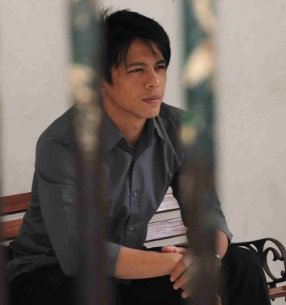
Ariel jail term to expire in 2012 and he can sing the song 'deleting your tracks', the song Peterpan 'nothing lasts forever', and the song 'All about us'. So we wait for the freedom of Ariel in 2012.
  Read More ...


Final Fantasy XIII

Whether you loved or hated Final Fantasy XIII, anyone who cares about its sequel wants to know how it compares: is it better than FFXIII? How different is it? Well, Final Fantasy XIII-2 definitely improves upon XIII… in some ways.
As with XIII, your enjoyment of XIII-2 will greatly boil down to personal taste, but speaking generally, XIII-2 is markedly catered toward longtime Final Fantasy fans compared to its vastly divergent (and therefore highly divisive) predecessor. The return of the moogle is symbolic of this, but its classic tendencies are manifested throughout the game, most notably through its increased focus on exploration and discovery. These changes aren't without their tradeoffs, but if you're a longtime Final Fantasy fan, you will probably prefer XIII-2 over XIII.

The freedom of the Historia Crux


One of the best parts of the Historia Crux structure is that it allows the player to selectively go back to key moments in the game and replay them to see different outcomes. Once you've obtained the Gate Seal for a particular node on the map, you can "close" the gate, resetting the time to when you first stepped through it, so you can experience that portion of the story again, and as many times as you'd like. And since the story does contain branching decisions here and there, being able to reset individual story moments makes it easy to see all possibilities without actually having to replay the entire game multiple times.
You might have guessed where this is going. Yes, there are multiple endings to Final Fantasy XIII-2 (quite a few, in fact). But the genius bit is that since you don't have to play the game in a linear fashion, you can see many endings without ever having to start over from scratch. It’s like a Choose Your Own Adventure book in a way – if you get to one dead end, you can simply turn back the page to where the story branched off and keep going down a different path. Don't like the way a scene played out the first time? You can easily go back and play it again without any fuss or penalty. This system thoroughly respects the player's time by not wasting any of it.

Saving the world


Say you're in the city, exploring one of Academia's many flashy alleyways and suddenly you remember where you might have seen a particular flower that some NPC asked for in a side quest. You can pop back to the Crux in a jiffy, skip over to Bresha Ruins, grab the item and complete the quest, then teleport back and return to exactly where you left off in Academia. The save system is so fluid and flexible that you never need to worry about losing your progress at any point at all, and the freedom to jump across time and space so easily feels delightfully efficient.
Speaking of locations, we were nervous going into the sequel that many of the environments would be recycled from XIII, but XIII-2 features a surprisingly large array of new locales. And the places that are recycled don't feel like they've been thrown in lazily, since it makes sense story-wise that we'd have to revisit some old places, since it's still the same world after all. Many of the old locations have been totally transformed too, and the environments constantly play a silent part in telling the story through how they've changed in different time periods (and across alternate timelines).

Above: Watch us play through some of the game
In FFXIII-2, the timeline has mysteriously changed, and everyone believes that Lightning perished in that battle. Only Serah remembers the truth, but even she questions her own sanity in the face of what all her friends believe to be reality. Then a stranger suddenly enters her life, a young man named Noel who claims he's from the future and has met Lightning in another dimension outside of normal space-time. Both want to alter the timeline – Serah wants to bring her sister back, and Noel wants to save humanity from the ends times he's seen with his own eyes. With their fates in alignment, they set out to change history.
As with any Final Fantasy game, it's difficult to write meaningfully about the story without spoiling anything. Where XIII created a fascinating mythos that revolved around the struggle between humans and demigods and the opposition between civilization and untamed wilderness, XIII-2's story is much more character driven. Serah and Noel are both surprisingly interesting and dynamic characters once you get past their over-the-top character designs.
It's a good thing too, because you won't be seeing much of anyone else for any extended length of time – Serah and Noel are really the only two main protagonists in the game. It's a bit of a shame, because the Final Fantasy series has excelled at creating some of the greatest ensemble casts in gaming, and being stuck with the same two party members for the entire game will definitely bother some people. If you can put your expectations of a larger party aside though, the extra time getting to know Serah and Noel isn't wasted, and makes them more memorable characters than most of the cast of XIII.
 Above: The characters are less abundant, but arguably more likable
As you play through the story, one thing that's especially great about the "time gate" scenario is that it completely eliminates the break in reality that often comes from ignoring the narrative urgency of the main quest to explore and take on boatloads of sidequests. Because opening a time gate transports Serah and Noel to a specific moment in time, there's never a need for them to rush. Relax, explore, and when you're ready to take on the next big challenge, it'll be waiting for you, frozen in time until you hit play.


To battle!

If you're familiar with FFXIII, the core of the battle system in XIII-2 remains unchanged. While many traditional turn-based battle systems are all about micromanagement, the Paradigm system in XIII and XIII-2 puts the player in a high level, "big picture" role, if you will. Instead of selecting individual actions for each party member, you direct their actions all at once like an alpha dog issuing commands to the pack.
A Paradigm is a set of roles for the three party members that determines how each character functions in battle. Each role is extremely specific in what it can do – Medics can only provide healing and Commandos can only attack, nothing else. Each role also provides an added bonus to the entire team, like boosted defense for all allies when a Sentinel is in play.

Final Fantasy XIII-2 review

Whether you loved or hated the original, its sequel will surprise you

Words: Carolyn Gudmundson on January 30, 2012


So what about the story?

All this time travel relates directly to the story, which begins immediately after the final cutscene of FFXIII ends (and it goes without saying, but SPOILER ALERT FOR FFXIII). Fang and Vanille have summoned Ragnarok, creating a massive crystal pillar to keep Cocoon from crashing down. In the original ending, Lightning survived the near-cataclysmic event and was happily reunited with her sister Serah.

Above: Watch us play through some of the game In FFXIII-2, the timeline has mysteriously changed, and everyone believes that Lightning perished in that battle. Only Serah remembers the truth, but even she questions her own sanity in the face of what all her friends believe to be reality. Then a stranger suddenly enters her life, a young man named Noel who claims he's from the future and has met Lightning in another dimension outside of normal space-time. Both want to alter the timeline – Serah wants to bring her sister back, and Noel wants to save humanity from the ends times he's seen with his own eyes. With their fates in alignment, they set out to change history.
As with any Final Fantasy game, it's difficult to write meaningfully about the story without spoiling anything. Where XIII created a fascinating mythos that revolved around the struggle between humans and demigods and the opposition between civilization and untamed wilderness, XIII-2's story is much more character driven. Serah and Noel are both surprisingly interesting and dynamic characters once you get past their over-the-top character designs.
It's a good thing too, because you won't be seeing much of anyone else for any extended length of time – Serah and Noel are really the only two main protagonists in the game. It's a bit of a shame, because the Final Fantasy series has excelled at creating some of the greatest ensemble casts in gaming, and being stuck with the same two party members for the entire game will definitely bother some people. If you can put your expectations of a larger party aside though, the extra time getting to know Serah and Noel isn't wasted, and makes them more memorable characters than most of the cast of XIII.
Above: The characters are less abundant, but arguably more likable
As you play through the story, one thing that's especially great about the "time gate" scenario is that it completely eliminates the break in reality that often comes from ignoring the narrative urgency of the main quest to explore and take on boatloads of sidequests. Because opening a time gate transports Serah and Noel to a specific moment in time, there's never a need for them to rush. Relax, explore, and when you're ready to take on the next big challenge, it'll be waiting for you, frozen in time until you hit play.


To battle!

If you're familiar with FFXIII, the core of the battle system in XIII-2 remains unchanged. While many traditional turn-based battle systems are all about micromanagement, the Paradigm system in XIII and XIII-2 puts the player in a high level, "big picture" role, if you will. Instead of selecting individual actions for each party member, you direct their actions all at once like an alpha dog issuing commands to the pack.
A Paradigm is a set of roles for the three party members that determines how each character functions in battle. Each role is extremely specific in what it can do – Medics can only provide healing and Commandos can only attack, nothing else. Each role also provides an added bonus to the entire team, like boosted defense for all allies when a Sentinel is in play.


Above: Take a look at the battle system in action During battle you always have an active Paradigm in place, which you can change whenever you'd like by hitting L1/LB to bring up your Paradigm deck. Building a Paradigm deck with a variety of offensive and defensive Paradigms allows you to respond strategically to dynamic battle conditions. So you might go in guns blazing with a Commando-Ravager-Ravager set, then fall back to Commando-Ravager-Medic to heal as needed. Roles like Synergist (buffs allies with status enhancements) and Saboteur (debuffs the enemy with status ailments) come in particularly handy during long, brutal boss battles where you'll need every advantage you can conjure.
Most of the new "cinematic action" sequences occur during boss battles too, and these are really nothing more than quick time events. It's a feature that almost wouldn't be worth mentioning if it weren't so heavily touted in FFXIII-2's trailers – they're used fairly sparingly, kept brief, and are overall pretty unobtrusive. During particularly dramatic cutscenes, we definitely has a few moments where pulling off a flashy killing blow with a successful QTE definitely felt pretty cool (and we can imagine the opposite if we'd missed it at the end of a lengthy battle), but overall it's not a feature that's going to make or break anyone's enjoyment of the game.
One of the complaints about the battle system in FFXIII was that it "played itself," but this isn't exactly the case. When the difficulty ramps up, the battle system is a perfect mix of thoughtful strategy and quick reflexes. Directing your entire team's actions with the press of a button by shifting Paradigms on the fly still feels satisfying when everyone comes together to pull off a hard-won victory.
Above: Learning the combat system reveals the deep intricacies

The problem is, it's a system that's only as great as your opponent is. Too often in FFXIII-2, we played through lengthy stretches of the game where we just didn't feel challenged enough by the enemies. Often, we never had to shift Paradigms at all from our default offensive stance, and in those cases it does feel like the game is playing itself because very little action is needed from the player. The challenge is there if you seek out some of the tougher sidequests and go for better endings, but at times we definitely felt like the overall difficulty level was too low. Monsters definitely scale up in strength when you revisit earlier areas too, so it's a bit puzzling why they almost always didn't feel scaled up enough. Even total wimps should not think for one second about playing this game on the easy setting. Don't do it.
Read More ...


Source : http://www.gamesradar.com

The Humble Bundle for Android now playing

The Humble crew launches its most “cross-platformiest” pay-what-you-want charity sale

Up to four games for Android, PC, Mac, and Linux are on offer in the latest Humble Bundle collection, which the charitable video game organization is calling its most “cross-platformiest bundle ever”.
Available now where fine Humble Bundles are sold (hint: its website), the Humble Bundle for Android stars 11 bit studios' reverse tower defense game, Anomaly: Warzone Earth; Hemisphere Games' amoeba adventure, Osmos; and Mobigame's cubic puzzle-platformer, Edge (and Edge Extended). Paying more than the average price, which is currently hovering around the $6 mark, will also unlock 2D Boy's mega-hit physics puzzler, World of Goo. 

Much like the non-Android friendly Humble Bundles that came before it, this humble package is available for whatever price you deem appropriate. Payments can then be split amongst the developers, Humble Bundle organizers, or the Electronic Frontier Foundation and Child's Play Charity. At time of print, total payments were closing in on $500,000, with Linux users paying the highest average at $8 and Mac buyers taking second place at $6.80.
The selection seems a bit sparse for a Humble Bundle promotion, but considering the sale is still on for another two weeks, expect even more “cross-platformery” games to be added to the list as the sale picks up.
Read More :

 Source : http://www.gamesradar.com

New bi-turbo tdi packs even more punch into Audi A6 and A7 sportback

The most potent Audi V6 TDI ever to enter production powers executive class Audi models to 62mph in a fraction over five seconds and returns up to 44.1mpg


  • Advanced new biturbo TDI engine heads diesel line-up in A6 Saloon, Avant, allroad quattro and A7 Sportback ranges – OTR prices from £43,810
  • Available now in A6 Saloon and Avant and A7 Sportback, and later in 2012 in A6 allroad – first deliveries in spring
  • 313PS from 3,900-4,500rpm, 650Nm from 1,450 to 2,800rpm
  • A6 Saloon 3.0 BiTDI quattro – 0-62mph in 5.1 seconds, governed 155mph top speed, combined MPG 44.1, CO2 169g/km
  • Sound actuator in exhaust system accompanies remarkable performance with sports car exhaust note
Knockout punch in a velvet glove comes courtesy of a formidable new 313PS Audi Biturbo TDI engine, which is now available for A6 Saloon and Avant and A7 Sportback models. The new twin-turbo V6 is notable not only for being the most powerful six-cylinder diesel engine ever offered by the Vorsprung durch Technik brand, but also the sweetest-sounding. Available now in A6 models priced from £43,810 OTR, and from £51,645 OTR in the A7 Sportback, it combines trademark Audi TDI refinement with an exhaust-mounted sound actuator that enables it to deliver its mighty 650Nm output to the tune of a distinctly sporting soundtrack.
Slotting in above the single-turbo 204PS and 245PS versions of the 3.0 TDI that already feature in the A6 and A7 Sportback ranges, the latest V6 has a two-stage turbocharger group that delivers a maximum boost pressure of up to 3.2 bar, helping the A6 3.0 BiTDI quattro Saloon to lunge at the horizon and pass the 62mph marker in as little as 5.1 seconds, and the A6 Avant and A7 Sportback to do the same in just 5.3 seconds. An electronically limited top speed of 155mph is common to all versions.
Like the existing TDI engines, the new star performer is backed up by technologies from the Audi modular efficiency platform, including start-stop and recuperation systems and the innovative thermal management system that quickly brings the coolant and oil up to their operating temperatures. With their help, combined economy in A6 and A7 Sportback models is on an equal footing at 44.1mpg – an impressive figure given the high outputs and low acceleration times involved.

Sound actuator

Thanks to an innovative actuator in the auxiliary channel of the exhaust system, the BiTDI A6 and A7 Sportback models don’t sound like they should be capable of such level-headed economy figures. The actuator system essentially consists of a speaker which imposes a defined oscillation pattern on the exhaust flow and transforms the typical TDI exhaust note into a more sonorous roar that is closer to the output of a high-performance petrol engine.
Without exception, power is transmitted from the BiTDI engine via an eight-speed tiptronic transmission to the latest generation quattro all-wheel-drive system, which features a self-locking centre differential and torque vectoring for optimum traction and stability. A sport differential which distributes power in continuously variable proportions between the rear wheels is available from the options list to sharpen and quicken response even further.
The mighty new BiTDI engine is available in conjunction with SE and S line specification in the A6 Saloon, A6 Avant and A7 Sportback. The forthcoming A6 allroad quattro, due to open for order in February, will also offer this exceptional unit.
Stand-out features common to all these models include satellite navigation linked to a 6.5-inch retractable colour monitor, Milano leather upholstery, the Audi drive select adaptive dynamics system controlling throttle response, transmission shift points and steering feel, the Audi parking system plus, light and rain sensors, cruise control and keyless go push-button engine ignition.

Source : http://www.audi.co.uk

Thursday, February 2, 2012

Honda’s new Acura NSX supercar concept

Posted by Kelly Levinsohn in Automotive News, Autostyle, Concept car news, Super car news on 12 15th, 2011.Honda has officially confirmed that it will be showcasing its new NSX supercar concept at the upcoming Detroit Motor Show in January 2012. The next-generation Acura NSX supercar will be one of four all-new vehicles revealed by Honda next year.
Some background on Acura – it’s Honda’s upmarket wing in America that came to Europe as a Honda. It’s still fondly remembered as one of the first supercars to add comfort and ease to its pursuit of outright speed with three-time Formula 1 champion Ayrton Senna involved in its development. An earlier NSX project was scratched during the financial storm of 2008 but Honda are clearly back on track with this new project.
Aside for the confirmation of the project, Honda has not revealed much information but by looking at Honda’s latest strategy the new NSX will pioneer a more sporting hybrid application of the technology seen in lesser Hondas.
The Acura NSX is expected to be a two-seater with a lightweight build, a full zero-emissions EV capability and a launch date speculated to be in 2013.
Read More :


Source : http://100hotcars.info

2013 Kia GT to produce coupe and wagon

There have been rumours circulating that Kia was planning to build a production version of its GT concept but a new report but a new report has indicated that the new model could also be available in a wagon and coupe variant.
Citing anonymous sources, Inside Line reported that Kia is considering a series of GT-based vehicles rather than a single sedan or hatchback. The aim of this decision is likely to assist Kia in spreading out development costs while allowing the model to target a wider range of consumers.
While no date has been confirmed for the launch dates of the coupe and wagon, the standard model could be available in 2013


Read More...

Source : http://100hotcars.info

EA leaves Online Passes out of Syndicate

Electronic Arts' upcoming Syndicate won't include an Online Pass despite containing substantial online multiplayer content, the game's developer has revealed. Speaking to Eurogamer, executive producer Jeff Gamon explained that the title's multiplayer mode was given “equal billing” with the single-player campaign, rather than restricted access: “We want as little resistance or barriers to entry as possible.”

While Online Passes are standard-issue for Electronic Arts-built games, the title's development occupies a grey area between internal and outsourced. While coding of the EA-owned IP was overseen by EA Partners, indie studio Starbreeze managed to convince the publisher to bend the rules, Gamon says, “because it didn't have competitive multiplayer and because we wanted as many people as possible to be playing co-op.”
Gamon's hope is that the strategy – together with a decent helping of content – will be rewarded with a high user-retention rate. He estimates that players should take “a good six, seven hours” to see all the game's co-op, with the game containing what he sees as a high replay value: “to progress your character and upgrade a few weapons is a heap of content.”
The game releases Feb 21. We're not going to come right out and suggest you reward EA/Starbreeze's risk by keeping your copy until the day you're buried with it, but we're certainly not going to advise against it either.

Read More ...


Source : http://www.gamesradar.com

High Horse: Difficulty in games is broken

High Horse is a rotating opinion column in which GamesRadar editors and guest writers are invited to express their personal thoughts on games, the people who play them and the industry at large.

When I was younger, game difficulty barely factored into my consciousness: I acknowledged that certain games were harder than others, but I didn’t complain about it. I beat my head against the last level of Ninja Gaiden II on the NES repeatedly until I won, and I cursed and stomped around my room, but it never occurred to me the state of affairs could be a problem with the game. Older gamers may sound like we’re calling newer gamers coddled when we talk about the old days, but I’m glad that games have gotten easier and offered more difficulty levels. As a kid, I had all the time in the world to die over and over; as an adult, I need more fun and less frustration in my much-more-limited free time.
However. I’ve found my niche: that of an experienced gamer who’s good enough to enjoy a challenge, but not so amazing at games that I can crank difficulty up to the hardest level like it ain’t no thing. From that perspective, game difficulty is showing increasing problems.

At the core of the issue are some basic assumptions of what “Normal” and “Hard” are. In the old days, Normal was what you played until you got good enough at a game until you could tackle Hard mode (something which I almost never attempted back then). Nowadays, Normal in many games has edged closer to what Easy mode would have been 20 years ago. Hard is now the equivalent of Normal. The solution to this should be obvious: just crank it to Hard on every game.
Unfortunately, developers seem to be approaching the actual difficulty balance within Hard mode like they did in yesteryear: they don’t worry if it’s pitched just right, because if you choose Hard mode, you “kind of deserve whatever you get.” That mentality was fine in the past, but now that Hard is the only option for a decent challenge, it means that I can almost never find a reasonable sweet spot for my own skill level. Here’s an example: in Gears of War 2, the difficulty levels have descriptions to guide you. Easy mode says (I’m paraphrasing) “You’re new to shooters.” Normal mode says “You have experience with shooters” and Hard says “You know how to pull off a headshot.” I thought “Hey, I know how to do headshots!” And off I went.

The game’s challenge was perfect for much of the story, but a number of times, I hit difficulty spikes that went from challenging to ludicrous. I’d get through most areas without dying, and then suddenly a random room would kill me 20 times in a row. Sure, I “deserved what I got,” but if I’d played Normal mode, the game would have been horribly boring, considering most of Hard mode wasn’t even particularly challenging.
Similarly, when I played the original Infamous on Hard mode, I had no problem tackling the entire game… until I got to the final boss. Suddenly, the difficulty spiked to 10 times greater than anything else in the game, and I tried to kill that jerk like 30 to 40 times before giving up in disgust. When Infamous 2 came around, I wanted to play through a complete story, so I shamefully turned Infamous down to Normal – and the last boss became a joke. That’s the only time I’ve ever reduced the difficulty of a game, and it still bothers me, as though I never truly beat it.

This trend worries me, because it feels like even developers of “hardcore” games are abandoning the notion that games are even games anymore. If there’s no actual challenge, then you’re just playing a vaguely interactive movie. If games all trend toward an easy-ass Normal mode and totally unbalanced Hard modes, where are gamers like me left?
On the other end of the spectrum, we have games that err on the side of too much difficulty without bothering to balance for tight controls or fair enemies. Again, it’s like the attitude of “you deserve what you get,” except that in this case, the games offer no easier options. Recently, I knocked the score down on BloodRayne: Betrayal, War of the Worlds, and Choplifter HD, due to their sloppy approaches to difficulty – each one had clunky controls combined with level design that called for pinpoint accuracy.
 I had no problems with these games as concepts. If a dev wants to make a super-difficult old-school game, more power to them. However, they need to give players the proper tools for the job – for instance, I liked Hard Corps: Uprising, because it had great controls and an RPG system that let you beat it slowly, through attrition. Super Meat Boy had some of the most precise platforming controls ever, and it also didn’t punish you too much for failure, always respawning you super-quickly, and never far from your goal.
 I know I’m not alone when I stare at the start screen and wonder, “If I choose Normal, I’ll be vaguely bored, but if I choose Hard, will I be screaming later?” Now more than ever, devs need to carefully balance difficulty, precisely because the gaming sphere is so much bigger. The range of skill levels is broader than ever. Games these days don’t need a million difficulty levels, just slightly expanded ones: devs only need to carefully balance Normal and Hard modes, and then leave Easy and Insane as the “you deserve what you get” options. There are exceptions: games like Dark Souls and Kirby’s Epic Yarn can still sit in their bookends at either end of the spectrum. But for most games, devs should focus on balancing their games for both “casual” and the “semi-hardcore” – those of us currently left hanging out to dry.
Read More ...

Wednesday, February 1, 2012

2012 raider S


Key Features :
  • “S” model gets even more chrome: chrome triple clamps, fork sliders, air box cover, engine covers, headlight housing, handlebar risers, etc.
  • A 6-degree yoke angle—the first ever on a Star® Motorcycle—makes it possible to achieve that custom look as well as neutral handling and straight-line cruisability: 33-degree rake plus 6 degrees yoke angle gives total rake of 39 degrees and 102mm of trail.
  • 5-spoke wheels carry a 120/70-21-inch bias tire up front, and a wide, 210/40-18 radial out back—the tallest and widest ever on a Star.
  • Estimated 42 mpg* means this cruiser can go the distance between fill-ups.

Engine :
  • 113-cubic-inch (1854cc) air-cooled, OHV with 4 valves per cylinder, pushrod 48-degree V-twin pumps out max torque at just 2500 rpm and max power at 4500 rpm for powerful, relaxed cruising.
  • Four pushrod-activated valves and two spark plugs per cylinder provide optimum combustion efficiency along with classically beautiful engine architecture.
  • Ceramic-composite plated cylinders for superior heat dissipation with forged pistons cooled by oil jets. Provides outstanding reliability and longer engine life.
  • 9.48:1 compression ratio and aggressive cam timing increase power output across the board.
  • Computer-controlled, twin-bore fuel injection monitors multiple engine parameters to calculate perfect mixture under all conditions; wide-angle 12-hole fuel injectors provide excellent atomization.
  • A 3.5-liter airbox is hidden in the area below the fuel tank for great performance and clean styling.
  • Two-into-one-into-two exhaust with Exhaust Ultimate Power valve (EXUP®) inside boosts torque in the 2500~3500-rpm range.
  • Special custom-machining of the cooling fin edges gives a jewel-like appearance to the engine as light hits it from different angles.

Chassis/Suspension:
  • All-aluminum cast frame is lightweight, rigid and tuned for light, athletic handling. A light, Controlled-Fill, aluminum swingarm casting complements the bike’s lithe style.
  • Low, sculpted seat holds the rider in place, and pullback bars reach back to enforce a casual, urban cruising style.
  • A 6-degree yoke angle—the first ever on a street-legal Star Motorcycle—makes it possible to achieve that custom look as well as neutral handling and straight-line cruisability: 33-degree rake plus 6 degrees yoke angle gives total rake of 39 degrees and 102mm of trail.
  • Custom 5-spoke wheels carry a 120/70-21-inch bias tire up front, and a wide, 210/40-18 radial out back—the tallest and widest ever on a Star.
  • 46mm fork tubes serve a sweet appearance and an excellent ride through 5.1 inches of wheel travel.
  • A tucked-out-of-sight single shock with adjustable spring preload out back provides a smooth ride under varying loads.
  • Flangeless fuel tank carries a full 4.2 gallons of fuel.
  • Front brake master cylinder with integrated lever operates a pair of 298mm front discs squeezed by strong monoblock calipers for excellent power and feel, with a 310mm disc out back.
  • Strong, light and narrow belt final drive contains embedded carbon fiber for even greater strength.
  • Wiring harness uses super-slim wires for compactness, are lighter weight and switchgear wiring is routed inside the handlebar for a clean appearance.

 Additional Features:
  • Left-thumb operated high-beam switch, and right-thumb activated accessory driving light switch for great visibility.
  • Jewel-like fit and finish, and Star quality paint, chrome and attention to detail are evident all over the Raider S.
  • Cool, tank-mounted instrumentation complements the custom look, and contains analog speedometer and fuel gauge, along with twin digital tripmeters, odometer and self-diagnostics.
  • Bright multireflector headlight, LED taillight, and amber turn signals behind clear lenses give a custom look.
  • 02 sensor and three-way catalyst reduce emissions.

Read More ...

Source : http://www.starmotorcycles.com

Tuesday, January 31, 2012

SPECIFICATIONS NINJA 1000 ABS

SPECIFICATIONS
Engine
Four-stroke, liquid-cooled, DOHC, four valves per cylinder, inline-four
Displacement
1,043cc
Bore x Stroke
77.0 x 56.0 mm
Compression Ratio
11.8:1
Fuel System
DFI® with four 38mm Keihin throttle bodies, oval sub-throttles
Ignition
TCBI with digital advance
Transmission
Six-speed
Final Drive
X-ring Chain
Rake/Trail
24.5 deg / 4.0 in.
Front Tire Size
120/70 ZR17
Rear Tire Size
190/50 ZR17
Wheelbase
56.9 in.
Front Suspension / wheel travel
41 mm inverted cartridge fork with stepless compression and rebound damping, adjustable spring preload / 4.7 in.
Rear Suspension / wheel travel
Horizontal monoshock with stepless rebound damping, adjustable spring preload / 5.4 in.
Front Brakes
Dual 300mm petal-type rotors with radial-mount four-piston calipers, ABS
Rear Brakes
Single 250mm petal-type rotor with single-piston caliper, ABS
Fuel Capacity
5.0 gal.
Seat Height
32.3 in.
Curb Weight
509.4 lbs.
Overall length
82.9 in.
Overall width
31.1 in.
Overall height
48.4 in.
Color Choices
Metallic Spark Black / Metallic Flat Micron Gray, Candy Lime Green / Ebony
Warranty
12 Months
Good Times™ Protection Plan
12, 24, 36, 48 months 
Read More ...

Twitter Delicious Facebook Digg Stumbleupon Favorites More

 
Design by Free WordPress Themes | Bloggerized by Lasantha - Premium Blogger Themes | Walgreens Printable Coupons