Friday, June 10, 2011

Top 10 destinations for twitchers


If you don’t know what a ‘twitcher’ is then this list is probably not for you – then again, perhaps you don’t even know you’re 
a twitcher yet. (Twitcher is just another name for birdwatcher.)
With over 10,000 species of birds in the world, twitchers travel far and wide to get a glimpse or catch the call of their favourite feathered friends. Modern-day shooting parties armed with cameras and binoculars flock to these 10 birdwatching hot spots.

1. Papua New Guinea

Image by tarotastic
This largely untouched and isolated archipelago has much wonderful natural habitat intact. The stars of the show are the fantastical birds of paradise, of which there are more than 40 species, all individually bizarre. With brilliant colours and showy, sweeping plumes, they engage in dazzling courtship displays, jumping, carolling and opening their feathers like Chinese fans. Another well-known character is the cassowary, a large flightless bird with a horny casque on its head to help it crash through the thick rainforest, and a fiercely sharp middle toe giving it a (probably exaggerated) reputation as the world’s most dangerous bird. Varirata National Parkis one of the top birdwatching sites.

2. Kruger National Park, South Africa

Image by babasteve
Better known for the Big Five of wild animals, Kruger is also the place to spot South Africa’s ‘big six’ birds – an irresistible challenge for birdwatchers determined to collect the set. They are the southern ground hornbill, Pel’s fishing-owl, lappetfaced vulture, saddle-billed stork, martial eagle and the kori bustard. All large and impressive, though not the most beautiful of creatures (particularly the vulture), they are mostly easy to spot. With much less kudos but just as thrilling for the traveller are the ostriches, often seen streaking across the savannah, and the common-as muck but oh-so-beautiful glossy starling, a shimmering jewel-like iridescent blue. There are safaris and accommodation options for all budgets at Kruger National Park; the northern section, particularly around the Luvuvhu River, is the best area to spot the birds.

3. Rift Valley, Kenya

Image by eggshapedkath
You’re sure to have seen this image before – it’s part of the lovely flight scene from Out of Africa, for example – a flock of flamingos like a swirling drift of pink petals covering a lake. But seeing it in the flesh is one of those spine-tingling moments that stay with you forever. The noise is raucous. Up close, the elegant birds are almost comical, performing their elaborate, synchronised courtship dance. The lake in question isKenya’s Lake Nakuru, but sadly, for reasons that aren’t quite certain, the numbers of flamingos returning to the lake is dropping each year. It’s worth catching while you can. Lake Nakuru National Park is 2km south of the centre of Nakuru. There is a large public campsite just inside the main gate.

4. The Pantanal, Brazil

Image by wildlifeshot
A major destination for birdwatching trips, the Pantanal is home to more bird species than all of North America. In this wetland region birds fly in flocks of thousands and six different species may nest on a single branch. The biggest Brazilian bird is also found here – the flightless rhea, which resembles a small ostrich. The smallest birds are the numerous hyperactive types of hummingbird. These beautiful little birds, with their dazzling iridescent colours, can be seen all over the country. They flit rapidly, almost insectlike, from one spot to the next, and can even fly backwards. The lyrical Brazilian name for them is beija-flor (flower-kisser). You can arrange guided tours (or head off on your own) from the gateway towns Cuiabá, Corumbá and Campo Grande. Reservations are needed for all accommodation in July.

5. Otago Peninsula, New Zealand

Image by Dunedin NZ
This wildlife region has become one of NZ’s hottest attractions, and its main drawcard is the birdlife. Taiaroa Head is the site of the world’s only mainland royal albatross breeding ground, where you can observe the incredible spectacle of soaring albatrosses, with up to 3m wingspans, coming in to land like a succession of 747s. Stewart Island is the best place to see the much-loved but very shy national icon, the kiwi, a flightless fluffy brown ball. The island is also home to one of the world’s rarest penguins, the endangered yellow-eyed penguin, named for their yellow feathered eye masks. The Royal Albatross Centre at Taiaroa Head is open daily and offers various tours as well as colony viewing. Bookings are essential.

6. Antarctica

Image by Anne Froehlich
Vast icy landscapes of haunting beauty are one drawcard for travellers; penguins, the symbol of Antarctica, are definitely another. With their comical waddle, social nature and will to live in the most inhospitable terrain on earth, penguins capture the imagination. Because of the scarcity of people, quiet observers may find themselves approached by curious birds. The four main species are the Adélie, chinstrap, gentoo and emperor, and they number literally in the millions. Emperor penguins are known for their valiant breeding cycle, marching miles from the ocean to their ancestral breeding grounds, where they endure bitter winters huddled together to incubate their eggs, before making the arduous journey back again to finally feed. Penguins will be a feature of all tours. The International Association of Antarctica Tour Operators website (www.iaato.org) provides lots of contact information.

7. Queensland, Australia

Image by djpmapleferryman
As with its peculiar animals, Australia’s isolation has evolved some unusual birds. The laughing kookaburra really does sound like it’s laughing, while the spectacular tailed lyrebird sounds like any bird or other sound it chooses to mimic – in touristed areas it often sounds like a camera shutter. Then there are bowerbirds that compete for female attention by creating towering nests from pretty shiny things; the flightless emu – the world’s second largest bird after the ostrich; and a seemingly endless array of brilliantly coloured parrots. These birds can be mostly seen all over the country, but one place you’re sure to encounter them all is Currumbin Wildlife Sanctuary inQueensland, where flocks of friendly lorikeets are a hallmark attraction. Currumbin Wildlife Sanctuary is located in Currumbin on the Gold Coast.

8. Ecuador

Image by ggallice
Like Brazil, Ecuador has a huge diversity of birdlife – over 1500 species. Among the best known and most colourful groups are toucans, which have huge rainbowcoloured beaks, sometimes as long as their bodies, enabling them to reach berries at the end of branches. Toucans live at forest treetop level and are often best seen from boats. Also at home in the rainforest canopy are macaws, particularly the blue and yellow variety. These large parrots’ clumsy antics and raucous music provide plenty of entertainment while exploring the jungle around the headwaters of the Amazon River. The riverside town of Tena is a natural jumping-off spot for rafting; many tour operators can be found on Avenida 15 de Noviembre.

9. Danube Delta, Romania

Image by Alastair Rae
If you want to go birdwatching in Europe, word is that the Danube delta is the place to go. This network of channels, lagoons, reed islands, woods and pastures on the Black Sea coast, though sadly depleted by the activities of humans, remains a natural wonderland. Ornithological highlights include thousands of pelicans, herons, ibis, ducks, warblers and white-tailed eagles, but the real appeal of the region is the proximity you can get to them. Areas of the wetlands are only accessible by kayak or rowboat, from where you can watch the wildlife a mere arms-length away. The visitor permit required to enter the Danube Delta Biosphere Reserve can be purchased from travel agencies and hotels in the gateway town of Tulcea.

10. Alaska,USA

Image  by wsimmons
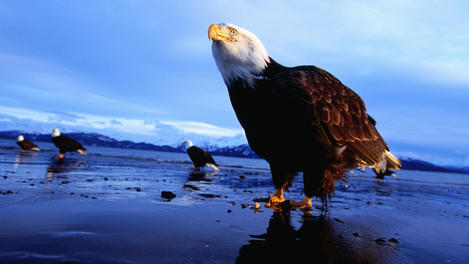
Much like great cats, birds of prey command respect and are always an object of fascination. One of the most sought after birds to sight is America’s emblematic bald eagle. Living atop lofty mountains and soaring to heights of 3,000m (10,000ft) they represent freedom, the nation’s most prized value. These magnificent raptors with their white heads and tails can be found in every state except Hawaii, but are most prevalent on the northwest coast. The best place to see them in large numbers is October to December on the Chilkat River in Alaska, where they gather for the annual salmon run. Chilkat Bald Eagle Preserve has excellent eagle-viewing areas about 30km from Haines along the Haines Highway.

Thursday, June 9, 2011

Facebook in new privacy row over facial recognition feature


Facebook has come under fire for quietly expanding the availability of technology to automatically identify people in photos, renewing concerns about its privacy practices.
The feature, which the giant social network automatically enabled for its more than 500 million users, has been expanded from the US to "most countries", Facebook said on its official blog on Tuesday.
Marc Rotenberg, president of the non-profit privacy advocacy group Electronic Privacy Information Center, said the system raised questions about which personally identifiable information, such as email addresses, would become associated with the photos in Facebook's database.
He also criticised Facebook's decision to automatically enable the facial-recognition technology for its users.
"I'm not sure that's the setting that people would want to choose. A better option would be to let people opt-in," he said.
Internet security consultancy Sophos noted that many Facebook users had seen the facial recognition option turned on without any notice in the last few days.
"Yet again, it feels like Facebook is eroding the online privacy of its users by stealth," commented Graham Cluley, a senior technology consultant at Sophos.
Facebook's "Tag Suggestions" feature uses facial recognition technology to speed up the process of labeling friends and acquaintances in photos posted on the site.
Facebook has been repeatedly criticised for changing settings involving privacy and identity in favour of making more data public in ways that means its users have to opt out of, rather than opt in to, the service.
Facebook, which announced in December that it planned to introduce the facial recognition service in the US, acknowledged that the feature was now more widely available.
The site also said in an emailed statement that "we should have been more clear with people during the roll-out process when this became available to them".
The statement noted that the photo-tagging suggestions are only made when new photos are added to Facebook, that only friends are suggested and that users can disable the feature in their privacy settings.
While other photo software and online services such as Google Inc's Picasa and Apple Inc's iPhoto use facial recognition technology, its use on a social network like Facebook could raise thorny privacy issues.
Google has stepped away from the widespread implementation of its Google Goggles service, which would try to identify people based on facial recognition through mobile phones running its Android operating system. Instead it only uses it for translating text and identifying objects. Eric Schmidt, Google's chairman, said earlier in June that he had concerns about its use with people.
"We do have the relevant facial recognition technology at our disposal. But we haven't implemented this on Google Goggles because we want to consider the privacy implications and how this feature might be added responsibly," he said. "I'm very concerned personally about the union of mobile tracking and face recognition."
Rotenberg noted that Apple's iPhoto software gave users control over facial recognition technology by letting them elect whether or not to use it with their personal photo collections.
Facebook's technology, by contrast, operates independently, analysing faces across a broad swathe of newly uploaded photos.
Last year the Electronic Privacy Information Center filed a complaint about Facebook's privacy practices with the US Federal Trade Commission, which Rotenberg said was still pending.
He noted that he planned to take a close look at Facebook's new announcement involving facial recognition technology.

Source : http://www.guardian.co.uk

Appeals court judges skeptical of government's health care case


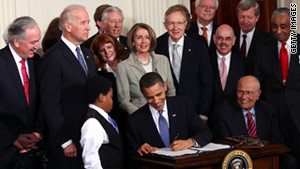
A federal appeals court in Atlanta was openly skeptical Wednesday that the sweeping health care reform law championed by President Barack Obama would survive constitutional scrutiny.
A three-judge panel heard arguments in a massive lawsuit brought by Florida and 25 other states.
The 11th Circuit Court of Appeals was the latest of three similar federal panels across the country to hear challenges by states and private groups to the Patient Protection and Affordable Care Act. Separate rulings from those courts in coming months will form the basis of a certain appeal to the Supreme Court, which could offer the final word on the landmark legislation, perhaps in time for the 2012 election year.
The main issue was the law's so-called individual mandate, the requirement that most Americans purchase health insurance by 2014 or face severe financial penalties. Lawyers for the states said forcing people to buy a product like health insurance is unconstitutional and unprecedented.
"If we uphold the individual mandate in this case, are there any limits on congressional power?" asked Judge Joel Dubina, who was named to the bench by President George H.W. Bush. His daughter is a first-term GOP congresswoman from Alabama, Rep. Martha Dubina Roby.
The two other judges who heard the nearly 2 1/2 hours of arguments -- Judges Frank Hull and Stanley Marcus -- were also concerned the law went too far in mandating that states expand various Medicare health coverage requirements. Both judges were appointed by President Bill Clinton.
The case, Florida v. U.S. Department of Health and Human Services, was moved up from District Court after a judge in January declared key provisions of the health care law unconstitutional.
Initial arguments refocused attention on the issue of "coercion." Basically, the 26 states are arguing that the requirement that states expand Medicaid coverage amounts to compulsion and coercion of the states, in violation of the 10th Amendment to the U.S. Constitution.
The judges also heard arguments on "severability" -- whether the determination that one provision of the law is unconstitutional invalidates the entire act. District Court Judge Robert Vinson, who heard the case in January, ruled that the unconstitutionality of one individual mandate voided the entire piece of legislation.
The appellate court heard arguments regarding the individual mandate as well, but focused much of their time and attention on the issue of coercion.
Paul Clement, who argued for the state of Florida, said after the hearing, "We were very gratified that the court ... was very interested in the coercion arguments, and the fact that this is the most coercive statute ever passed, that really limits the ability of states to make a decision or not."
Florida Attorney General Pam Bondi issued a statement congratulating Clement on his work.
"Our attorney ... did an excellent job," the statement said. "The federal government could not rebut our argument that the individual mandate is an unprecedented intrusion on individual liberty. ... I am encouraged by the judge's response to our arguments that the health care law's Medicaid expansion unconstitutionally coerces the states by forcing them to assume billions in uncompensated Medicaid costs."
Acting U.S. Solicitor General Neal Kuma Katyal presented the Department of Health and Human Services' case. He specifically addressed the individual mandate. Katyal said it was a tax and, therefore, constitutional.
Texas Attorney General Greg Abbott picked at Katyal's argument: "The lawyer for the Obama administration actually threw President Obama under the bus, because the Obama administration lawyer came out and said, 'This is a tax,' which is contrary to what President Obama promised, which is that he would not raise taxes on people."
Joining Florida in its challenge are Alabama, Alaska, Arizona, Colorado, Georgia, Idaho, Indiana, Iowa, Kansas, Louisiana, Maine, Michigan, Mississippi, Nebraska, Nevada, North Dakota, Ohio, Pennsylvania, South Carolina, South Dakota, Texas, Utah, Washington, Wisconsin and Wyoming.
Virginia and Oklahoma have filed separated challenges, along with other groups and individuals opposed to the law.
There are about 450 components to the health care law. Some will not go into effect for another two years, but some have already gone into effect.
The parts of the law currently being administered include small-business tax credits, federal grants and consumer protection measures.
The 6th Circuit Court of Appeals in Cincinnati heard arguments last week in another case related to the health care act. The 4th Circuit in Richmond, Virginia, heard two challenges last month.
Judges in Florida and Virginia have found parts of the law unconstitutional in recent months, while courts in Michigan and Virginia have upheld provisions.
Legal experts expect challenges to the health care law to ultimately end up before the Supreme Court, although that could take at least a year or two.

Source : http://edition.cnn.com/

Twitter Delicious Facebook Digg Stumbleupon Favorites More

 
Design by Free WordPress Themes | Bloggerized by Lasantha - Premium Blogger Themes | Walgreens Printable Coupons